The AI That Helped Build Illinois's First Final Four Team Since 2005
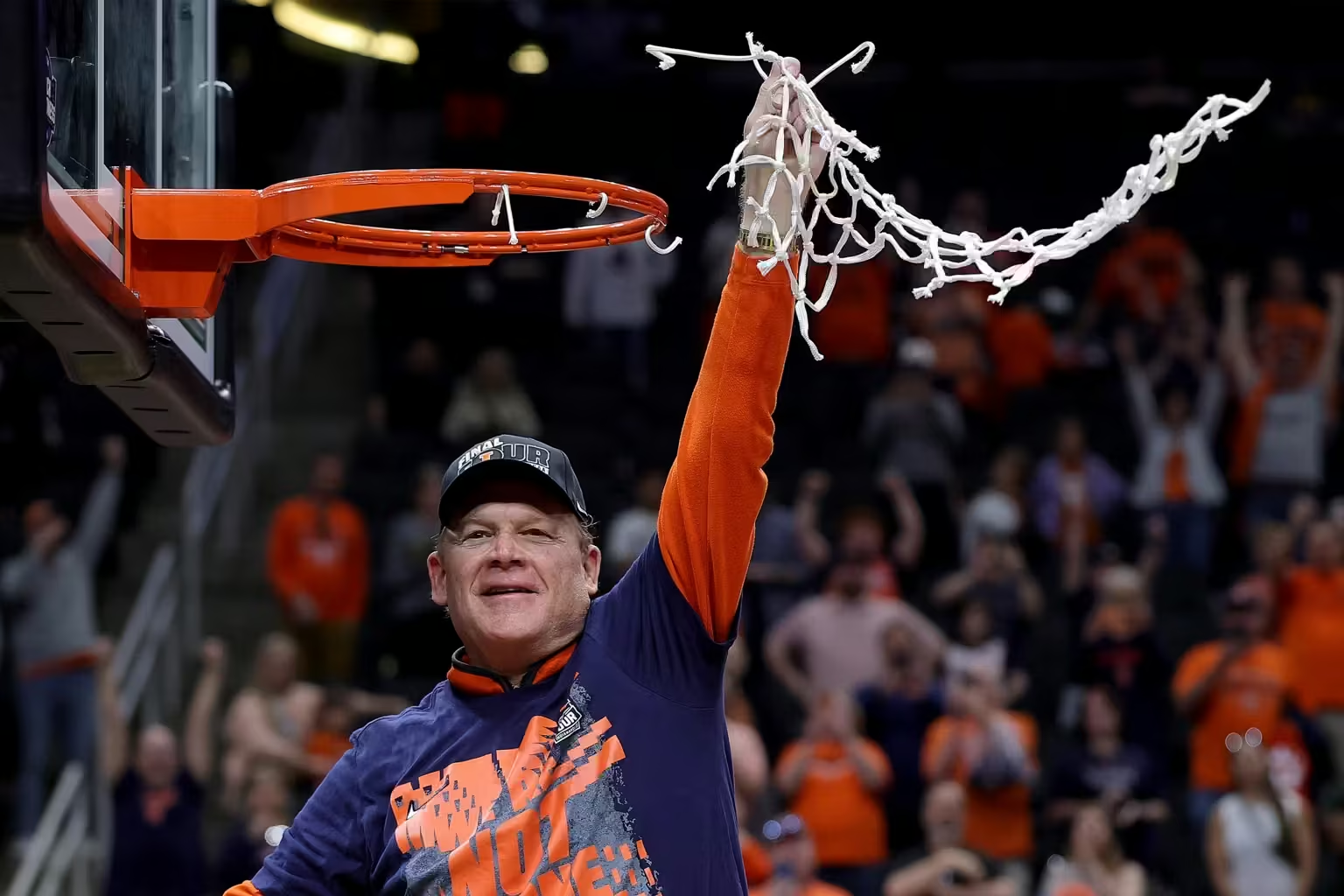
Brad Underwood spent 40 years trusting his eye for talent. Here's what changed when he started trusting behavioral data instead.
Brad Underwood watched the film on Marcus Domask and said no. Not a maybe. A no. Domask was a power forward from Southern Illinois, and as far as Underwood was concerned, he wasn't a Big Ten player. His staff kept pushing. Underwood kept pushing back.
Then one of his assistants handed him a different kind of report. No stats. No scouting grades. No projected upside. Just a clear picture of who Domask was as a person: how he competed, how he took feedback, how he showed up for the people around him.
Underwood read it and changed his mind on the spot.
"I read that and said, 'We need to go get him tonight,'" Underwood told CNN Sports.
Domask started 38 games for Illinois that season. He finished second on the team in scoring, first in assists, and earned Big Ten Newcomer of the Year. Underwood started calling him Luka, as in Doncic. Illinois reached the Elite Eight.
Two years later, Illinois made the Final Four for the first time since 2005.
Underwood said it plainly: he wouldn't have built that roster without Profile.
"These teams are like a Fortune 500 company. And like any good CEO, you need to know your people. What interests them, how they succeed. If you don't know that, how can it work?"
- Brad Underwood, Head Coach, University of Illinois
The problem every coach faces now
Underwood has been coaching for over 40 years. He started as a graduate assistant at a Division III school in Texas, making $299 a month in an apartment so small the microwave lived by the front door. He built his entire coaching career on instinct, relationships, and a sharp eye for talent.
That worked for a long time. But college athletics changed.
The transfer portal means rosters turn over faster than ever. International recruiting opens doors to players coaches have never seen in person. NIL changed what it takes to close a recruit. Coaches no longer have four years to figure out who a player really is. Sometimes they have four days.
And every decision carries a real cost. A bad read on a transfer can cost you a scholarship, a roster spot, and a season. There's no longer much margin to get it wrong.
Underwood wasn't skeptical of Profile because he was stubborn. He was skeptical because he'd spent decades doing it the hard way, and it worked. What changed his mind wasn't a sales pitch. It was what Profile actually showed him about himself.
When Chad Brown, Profile's founder, ran the assessment on Underwood, the results surprised both of them. Underwood came across as a hard-edged disciplinarian. His behavioral data told a different story: his top value was friendship. He was more emotionally driven by relationships than anyone on the outside would have guessed. That clarity made everything else click.
Profile gives coaches a clear behavioral picture of every person on their roster: how they communicate, what motivates them, how they handle pressure, and where friction is likely to show up before it does.
It's not a personality quiz. It's a decision-making tool. The kind that tells you, before you offer a scholarship, whether a recruit is the kind of player who walks in and asks what he can do for the team, or whether earning that trust is going to be a longer road.
For Underwood, that information became core to how he built Illinois's roster. He started using it to define the kinds of players he wanted: good teammates, willing workers, people who trusted the process. Then he used it to evaluate whether specific players actually fit that profile.
Domask fit. And Underwood almost missed him entirely.
When AI enters the locker room
Profile recently introduced Playbook AI, a coaching intelligence feature that lets coaches query their team's behavioral data in plain language. No charts to interpret. No reports to cross-reference. Just real questions, answered with real data.
How do I motivate this athlete before a big game? How should I approach a tough conversation with my starting point guard? Which role is this transfer actually built for right now?
Underwood, a 62-year-old coach who grew up in a world of film sessions and handshake recruiting, called it "really helpful." He said he'd had a blast with it.
That's not a small thing. Coaches who've spent 40 years trusting their gut don't typically embrace new tools without a reason. Underwood had one: it worked.
CNN Sports covered the full story of how behavioral data and AI coaching tools shaped Illinois's run this season. Worth a read if you want the details.
What this means beyond the court
Underwood's situation isn't unique to basketball. Any leader managing a team in motion faces the same pressure: people decisions that have to happen faster, with higher stakes, and less time to build the kind of relationship that used to tell you everything you needed to know.
Executives building teams through acquisitions. Founders scaling past the point where they can personally vet every hire. Managers inheriting people they didn't choose.
The question is the same as the one Underwood asked about Domask: who is this person, really, and how are they going to show up when it matters?
Profile exists to answer that question. Not by replacing judgment. By grounding it in something more reliable than a gut feeling.
More articles you may find interesting
A Platform for Leaders Who Can't Afford to Get People Decisions Wrong